Most-Read

Showing posts with label surviving academia. Show all posts

Thursday, December 21, 2017

Can R-1s Do Better to Prepare PhDs for Teaching Jobs?

I'm in the process of hiring a tenure-line faculty for the program I lead at a teaching institution.

When I was getting a PhD at an Research-1 institution (R1), I was trained to think of my research profile as the most important quality I could offer an employer, and was even discouraged from getting accolades as a good teacher, as it might detract from my profile as a serious researcher.

I think my institution thought they would lose some face if they produced anything but the "best" scholars, scholars who would ideally obtain positions at other R1s.  And I think they thought there would be no harm in us having a dossier that was "good enough" for an R1, because teaching schools would gratefully pick up the dregs of us that didn't hit the mark of the R1 holy grail job.

I have obtained two tenure-track positions at teaching institutions since I graduated in 2009, and find I am profoundly disappointed by the way I was conditioned to think about the value of an R1, the value of the scholar, and the value of teaching undergraduates.  But it's not just about undergrads and the glory of teaching; it's about the current state of American cultural politics, anti-intellectualism, and the value of higher ed to a functioning democracy.

Since I've been at teaching institutions, I have thought a lot about what my PhD institution failed to train me for, though, in full disclosure, I loved my time at grad school and I loved my advisors.

As I review dozens of applications for a teaching job, many from R1s (because PhDs are mostly at R1s), I am struck by a prevailing inability of these scholars to articulate, much less imagine, how their very refined, specialized area of study might ignite student interest and success.

If, for example, you study some obscure event that happened in 1982 in a galaxy far far away, on a speck of dirt on some planet, it's not inherently exciting in itself, even though you have convinced yourself that it is.

An R1 says "hey, that's really, really unique, and its uniqueness is enough for us. You're contributing something really new, and we know it's really new because we know everything about this field."

A teaching institution says "how will this translate in the classroom?"  If an application for a tenure-line job at a teaching institution fails to SHOW the answer to this question really clearly, then the candidate has been poorly trained for the job market.

And in case it needs saying, most jobs these days are at teaching institutions, not R1s.


I confess that I was fortunate; my heavy-duty R1 degree was enough to land me a tenure-track job.  For the second round, four years later, I really have no idea how I landed yet another tenure-line job, other than the publication of my dissertation as a book made me look serious.  Nowadays, this wouldn't be enough for a teaching job.  A narrowly-focused book that makes a unique contribution to a narrow field is just not very valuable to a teaching institution. And why would it be?

Nowadays, an application that makes a person's obscure research or creative life come alive in the classroom will blow the competition out of the water.

If a person's research or creative life is inherently accessible to students --such as having to do with stuff college students are already thinking about, even just a little-- even better.  Don't get me wrong: I'm not saying you need to tailor your research agenda to the whims of iGen. Quite the contrary; that's horrific. Don't do that.

I'm saying that R1s could do a better job training their graduates to frame their work in ways that is accessible, not just to hiring committees across the land, but to undergrads (who will be their main audience henceforth, much to the chagrin of the R1s), and also to (gasp!) the public.

The assumption that audiences will do the hard work we need to do to understand and value our research is just arrogant. Academia has been doing this successfully for a long time.  At a public institution like where I teach, the sham is up.

What counts as valuable research here-- the kind of research that gets you tenure-- is not what you think it is.  It's collaborative (with students, with community members, with others outside academia), it's radical (challenges dominant knowledge claims), it's about new forms of knowledge production (like, students bring knowledge and aren't just there to receive it), etc....  If you publish articles along these lines, we love you!  Being a superstar, solo scholar in some obscure area just doesn't work always.  But if this DOES describe you, how fun would it be if you could figure out a way to make students think your work is awesome, and make them want to do similar work?  Evidence that you can bridge research and teaching in these ways really blows our minds.

Which brings me to the subtle point I was making earlier about the current state of this democracy and anti-intellectualism.  Could R1s make their candidates' more attractive to teaching institutions? YES, and let me count the ways.*  Could they also make the research they produce more meaningful to the public?  YES.

And by doing so, could they engage in a much broader mutual, reciprocal form of knowledge co-production with people outside the academy?

We can only hope.

PhD students, ask more from your advisors and programs.

This historical moment demands more from us than to reproduce ourselves and narrow our audiences.
We would really like you to make your work exciting and accessible to us, to undergrads, and to non-specialists.   This might be a good thing for, oh, democracy, and, oh, America.

If your current advisors aren't telling you this, ask them to. Get a group of grad students together to think more about this.  Resist the temptation to deem yourself too awesome for a teaching job.

Consider the challenge I lay out here as a call for you to make your work meaningful in the world, useful in breaking down the shitty divisions in society, and dispelling the notion that the life of the mind is frivolous.

Just because we teach a lot here doesn't mean we don't value the life of the mind.  We're just way, way more accountable to showing others that the life of the mind is valuable.


*ways you can make your application more fitting for a teaching institution:


  1. In your teaching statement, avoid the "deficit model" approach to diversity.
  2. In your cover letter, SHOW, don't just tell, how much you love teaching.
  3. Wherever you discuss teaching, don't just cite theorists about how important student-centered teaching is; tell us how you make your research interesting to students.
  4. Don't just wax on about how much you love teaching. Loving teaching can kill you, and we want somebody who can survive a lifetime of teaching.  Saying that you have an "open-door" policy, for example, smacks of privilege.  Cultural taxation for faculty of color (and women faculty) is a major issue; how do you protect yourself? How do you leverage your teaching to support your other loves? Give us something more than just "teaching will save the world."
  5. Don't tell us that your way of doing student-centered teaching is to use the Socratic method and conduct discussion.  And for the love of the goddess, don't say that you mostly use lecture, and that you bring a variety of media into the classroom, such as videos and Power Point slides.  That doesn't say "student-centered"; that says "lazy."
  6. You're better off including challenges or critiques of your teaching that you've tried to overcome than quotes from students who love you.
  7. If you really want to be at an R1, but you're just desperate for a job, don't apply for this job.
  8. If #7 applies to you, and you manage to get to a campus interview, don't whine about whether we'll give you enough resources to do your ever-so-important research.  This will chafe on us like nobody's business.  Try to imagine that we all feel the same way about our research, and that just because we're at a teaching institution doesn't mean our research is worthless.

In sum, SHOW, don't tell why you belong here. And make your research applicable to college students in some way.


Monday, September 18, 2017

Friends Don't Let Friends Unpause: Curing Your Email Addiction

Oh Boomerang.... I do love you! It's an app. Get it.

You fling those emails away from me, like a shield deflecting arrows, poisonous tranquilizing darts.

You take over my email interface with a big blue "unpause" button, daring me to unplug the dam. You are a dike holding back the flood threatening to inundate my life with non-urgent, vapid, moist emergencies.

I sit at my computer, trained by the incoming emails, to wait more. Wait for another fire to put out, another flame to quell. It's become a sick habit, a twisted pleasure.  I'm on it, I'm busy, I'm responsive.  What for?  And at the cost of what?

Now, when the dam unleashes its fury at 6am, 1pm, and 3pm, I see a small litany of unimportant requests. I deal with them in 5 minutes. I don't waste time waiting for them. I don't intrude upon my family, my fuel, my loves, waiting... waiting... waiting... for all the requests that might make me feel important.


Research shows how much energy it takes to shift attention between one's "deep work" and shallow work.  Research shows how damaging email is to the psyche, to our sense of being overwhelmed by external pressures.  I have succumbed to those pressures, and have seriously wondered how I could possibly survive in my job without my addiction to email.  I respond to emails when I get up at night to pee, I respond to emails in the middle of other meetings, and I respond to emails while my children are trying to get my attention. My stupid smart phone makes this impulse to responsiveness all the more seductive.

Small fires are so fast to put out. Just give me a second, I have to just write this one quick thing.

____________

Here's the genius of Boomerang, for someone like me.  I'm not required to exert any kind of will power.  Turning off my phone's email ability hasn't worked.  Scheduling email times hasn't worked. Telling others that I don't check email except at certain times most definitely doesn't work.  Self-restraint DOES NOT WORK.  The quick-hit of email responsiveness is too addictive. You know what I mean, right?  If I'm not doing anything else, at least I'm performing a virtual persona of productivity.

This is just not acceptable anymore, for reasons I won't go into now.

______________

Suffice to say, Boomerang is your solution if you suffer from something similar.   Every time I have that impulse to check email on my phone: too bad! Every time I want to stop grading papers so I can check email (it's so much more interesting, no?), too bad! Every time I want to avoid my children's requests to see if more urgent requests are transmitting online, too bad!  Every time I want to avoid taking out the trash, too bad! Every time I want to pretend I'm so important in front of somebody who intimidates me, too bad!

I just simply must do something else with myself than open up my fucking phone.  It's brilliant.

Boomerang is also so genius because of the language it uses on the button it highjacks your email interface with-- "Pause"/"Unpause."  When you're in a "Pause" timeframe, Boomerang takes over your email and lets you know!  You can override the pause, and unplug the dam.  If you make the fateful decision to click on "Unpause", then God save your soul.  A little time clock thing will start, and, like a bomb going off, you'll start to see your inbox fill up.  Boomerang makes it hard to open the floodgates, discouraging you to make that decision whimsically.  The psychology of this is perfect for me.  I can't easily unpause on my phone; I have to be on my computer to do so.  The dam is breachable, but it's not easy.  Your interface is always reminding you to "Pause" again.

Let's pause on this idea of pause.  I have read several books on the value of the sabbath, the pause built into our rituals.  I have read at length about how our current work ethos punishes pausers.  Extract labor, extract labor, extract labor-- to think of this in Karl Marx's terms.  The interstitial moments, when nothing is happening, where nothing is taking place, have no value in contemporary life.  My loved ones send me articles cut out about how we need a pause from technology. I find beautiful articles in Buddhism magazines about the detriments of technological distraction.  I "get" why my email addiction is a problem.  But I haven't been able to translate that knowledge into action because, frankly, I'm weak when it comes to discipline and will power. Don't even ask about how much wine I drink, or the egregiousness of excuses I can muster to justify getting an iced mocha on any given day.

For a weak soul like me, Boomerang is some kind of savior.  I'm sure I sound like a proselytizing fiend, and I'm not getting paid to write this.  I genuinely want to share my story with  you, dear reader, of an addiction solved and a soul saved from the torturous drip, drip, drip of the email inbox.

What a genius name!  Can't touch me!


Update: despite no mention in the downloading process (I'm also not very detailed in my reading of fine print. See above, reasons why I need more time afforded by getting off email: because I'm BUSY!), it turns out this app costs money at some point.

I'm currently exploring its beauty, and wondering whether I can manufacture the kind of will power required to do what Boomerang does for me.  I'm also wondering why Google hasn't already created this functionality.... Anyway, sorry if I misled anybody, and get ready for that beautiful blue "Unpause" button to just go away.

I think I'll pay, as my friend Janelle says, because it's like you're getting your money's worth in email vacation!


Tuesday, September 12, 2017

"Are You Tired? You Look Tired!"; Or, "Why Aren't You Acting Like My Mom?"

If you read any of my posts, you know that I am thinking a lot about how to balance my love of teaching and the slippery slope that love falls into when I lose myself in their demands.  I'm sensitive to their feedback, worry about each of them, and do, in many ways, feel like their mom. And, as I noted in my last "rant" post, I do this willingly, and the payback is that teaching truly fuels me.

However, this past year's wealth of disasters--natural, political, and otherwise--has worn me (and many of you, and many of my students) very thin.  We're all keeping our heads just above (sometimes below) water, just treading, trying to anticipate when we'll have to take a deep breath to survive the next wave.  I can't help but feel obliged to help all my students do the same, and that sense of obligation is what's really going to drown me.

So, I've started taking some self-protection measures.  Dear reader, do not be mistaken that these are signs that I don't continue to absolutely adore my students and teaching.  I just want to be sure I can keep doing this for the long haul.  Ok, here it goes.  Some confessions:

1. Make it a goal to get worse student evaluations.  Did I just hear you gasp?  It's not that I could actually handle it if they were worse.  It would be like a sword in my heart, to be sure!  But it's a trick I play on myself to release myself of some of the minutae of the worries I have about them.  Being a hair less beholden to those evaluations in my approach to daily teaching life is probably healthy, right?

2. Ask for less feedback from students.  Is that another gasp?  I know, I'm totally losing my marbles.  I have always been one of those earnest professors that asks for feedback at every turn and then implements the feedback, and I have benefitted immensely from students participating in shaping the classes with me, and by them appreciating the transparency of my pedagogy.  I will still solicit feedback, not to worry.  But I am overwhelmed by it.  I'm frazzled, I'm losing my bandwidth to process all of the concerns. I feel like saying, "I'm doing the best I can. Give me a break." Sign of burnout? Yes.  I'll get back on the feedback wagon, but I'm just taking a short hiatus while I tread water.  Also, asking for feedback is weird: I'm getting all kinds of requests to do and solve problems that are not within my purview, and I worry I'm setting students up for expecting that I can solve these problems.  I'll fix this issue at some point, but I think I must have conveyed the message somewhere along the line that my teaching will resolve all their existential crises.  Maybe it's because my teaching seems to be causing all of their existential crises....  Oops.

3. Balance all the ways I identify as a teacher with realizing I'm also other things.  I love Rebecca Solnit's chapter in A Paradise Built in Hell, "Dorothy Day's Other Loves." It makes me cry. I have other loves besides this vocation, even though I love it.  I just have to spend some time remembering what those other loves are.  And I need to retreat into those loves-- just a little bit-- to remember how to breathe.

4. Get told I look tired by my students a lot more.  This one is a double-edged sword, and I can't say I set out with it as an explicit goal.  However, since I started taking some of these protective measures, I am spending less energy and time tripping over myself trying to perform my profound love for students.  When I see them, I don't just immediately light up and gush all over them like I used to.  I don't ask them, at every turn, like I used to, how they are and what's going on in their lives and how can I help?  I'm not acting like a customer service agent; I'm just sometimes thinking about other things like whether I have time to write, or what I want to make for dinner, or what to ask my kids about their day when I see them, or what I was doing on 9/11/01, or whether I should call my grandma, or whether "misplaced" is the right word to describe attention to climate change in the context of Harvey and Irma, or... This isn't about distraction, or denial.  I still love my students and get a lot of juice from them in return for this expenditure of brainpower on them.  But I am just slowing down, a la The Slow Professor, which means I'm just not bursting out of my seams all the time to please. I don't think this is tragic or that this is a sign that I am not absolutely in love with my students and profession anymore. On the contrary, I think it's something akin to sustaining this love.

But you're right, when I hear "you look tired, are you tired?", as I do more and more these days, what I'm really hearing is "why aren't you acting like my mother?"  Also, isn't there a rule that you're not supposed to comment on how a person looks?

Or maybe I really am just tired.


Monday, August 14, 2017

A Rant: Love, Quid Pro Quo, and Teaching

I love being at a teaching institution. I became a college professor because I am compelled to teach. When I was a kid, I'd pretend to be "sick" so I could be taken by my mom to her college and hang out on campus, just imbibing the whole college thing.  I'd watch her teach and scribble notes, pretending I was a student. I grew up thinking college was awesome and teaching was glorious.

When I went to grad school, people poo-pooed teaching.  I was at an R1 institution where "research" mattered more.  Teaching was to research as female was to male.  Get honored for teaching and lose respect among your colleagues, was a standard warning.  Yet I insisted that I wanted to teach, I wanted a teaching job at a school that valued teaching, like the place my mom taught and like the place I went for my own undergraduate degree.  I am sometimes sad for professors who want support in teaching but who are at research institutions, where their fabulous and liberatory innovations are ignored, or worse, actively discouraged.

I was shocked when I got my first job at a teaching institution that many curmudgeons would be annoyed when asked to learn to be better teachers.  Aren't you here to teach?, I thought.  Wouldn't you want training?  At R1s, training to teach is borderline taboo.  And here we are, at a teaching institution, proudly waving our love-for-teaching flags.  What was wrong with these old fogies who were insulted by the suggestion that they weren't already teaching well enough, allergic to "teaching and learning" professional development opportunities, and resistant to being evaluated for retention based on their effort to improve their teaching.  I just didn't get their issue.  I thought they were selfish sticks in the mud, that they didn't care about students, and that they were only interested in consolidating their own forms of tradition and power.

Then I got my second teaching job at HSU, where I have, over the past four years, loved teaching even more.  When I read bell hooks' writing on love for students, I cry.  Ask my students; I really love them.  I love teaching.  I feel it's a calling. I feel it is what I was put on the planet to do. I write an almost daily journal of things to improve and tweak.  I agonize at night over whether each and every student in my class is ok, whether my words are ever violent to any one of them, whether my white privileged ways of teaching made anybody feel silenced, whether there's anything more I can do to support them.  I go through a checklist of each student every day to make sure I think they're ok.  I feel like their mother.


I know this is wrong, and exploitative, and that the institution loves that I feel this way. I know that student evaluations expect this from me, and so I'm punished more by them if I'm off one day and can't provide that motherly love.  Even though I know these expectations are gendered and unfair, I still love loving teaching and I still love loving my students.  Sorry, that's what I'm here to do.

And I have spent years realizing that teaching is my own form of activism in a troubled world.  I agonize-- as many of you do-- over how I, as an American, middle-class academic, can contribute to assuaging the many evils my own presence on this planet has spawned.  I agonize over my relative lack of power: lawyers, engineers, politicians, movement leaders, media pundits-- they dictate the conversation and move worlds, not stuffy, jargon-prone, elitist academics, right?

I wrote a book that I thought was awesome when I wrote it, but have wondered ever since, despite the social-justice, strong politics of the argument, whether it will ever "make a difference."  Peer-reviewed humanistic social justice scholarship just collects dust and doesn't ever make it into public dialogue, in all reality, for the majority of us non-rock-star scholars, anyway.

And I just don't have any other kind of radical activist gene in me. I don't march the streets. I never called my congresspeople until 2017.  I have the luxury of being able to not pay attention to the news when I don't want to.  I'm not a movement solidarity type. Just not in my blood. But writing? YES. Teaching? HELL YES.  So, teaching is my activism.  I may love research and writing, but I don't delude myself that they are really making immediate, material changes in the world.  Teaching-- reaching, mentoring, challenging, learning from, and lighting fires with students-- is where it's all at for me.  Whenever I think, "I need to do more, I need to be more civically engaged, I should run for office, I gotta get out in the streets, I gotta donate more, I gotta be better and show up everywhere! AAAAAHHHH!!!", I remember, "Wait, I TEACH for God's sake."

So, that's how much I love and believe in teaching and in the mutual learning of being around college students. It transforms me, hopefully them, and ideally the real world.  No dust collecting here. Just passion and saving the world.
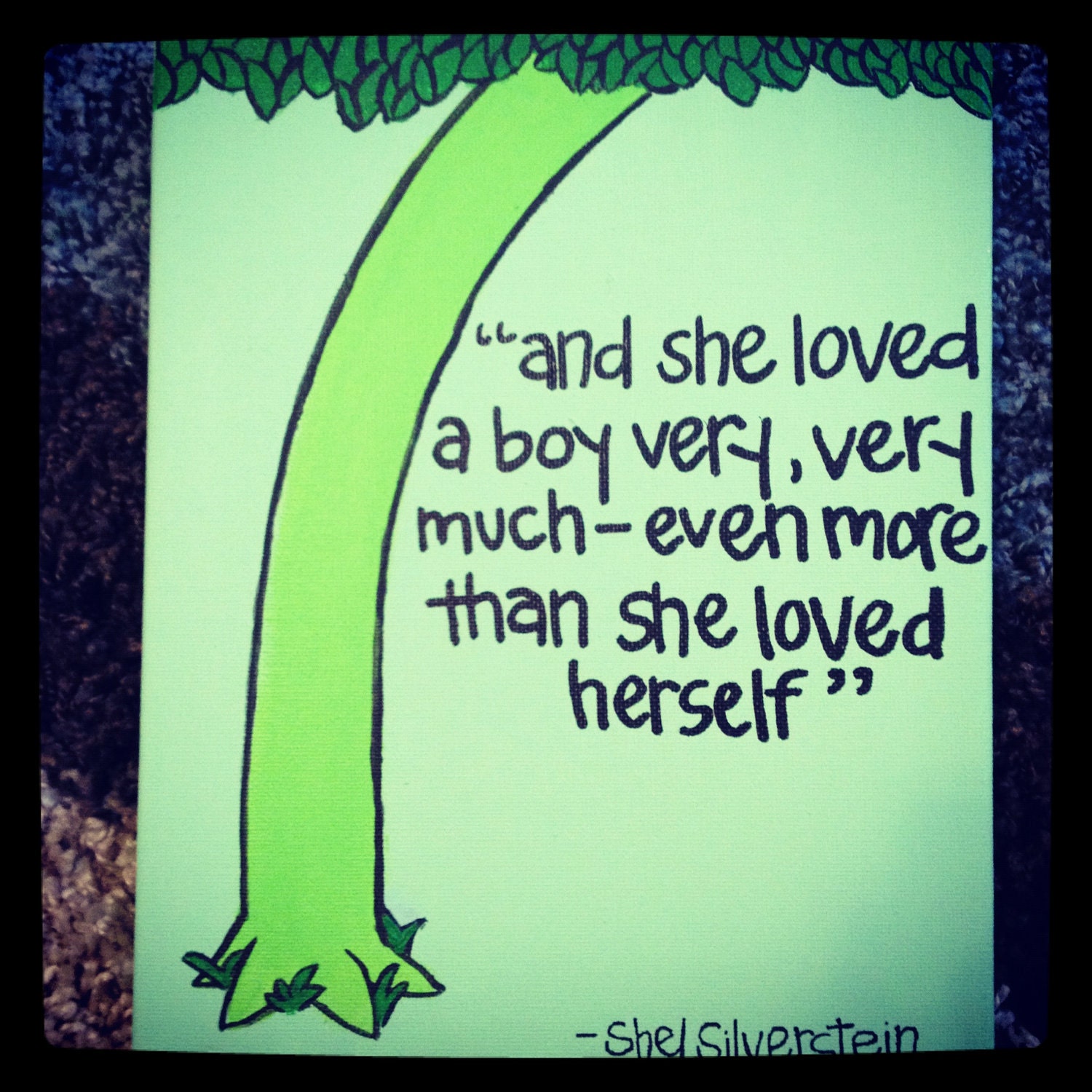


I'm never going to feel differently, but I'm getting really tired of being told that if I just loved my students a little more, if I just said hello with a bit more of a smile, if I made myself just a bit more available, if I responded to emails just a bit faster, if I held their hands as I take them to Counseling Services, if I help them move in to their dorms, if I make pancakes for those who can't go home on Thanksgiving, if I wipe their asses (you get the idea), we wouldn't have such an abominable retention rate.  (In case you're wondering, it's 11% that graduate. And that's over 6 years. Don't ask what we graduate in 4 years!)

Yes, there's evidence that suggests that students are going to stick around if they think a faculty member cares about them, gets to know them as people, respects them as whole individuals with problems, challenges, etc.... We are their ground zero, their daily interface with the campus, the pulse of student wellbeing.  That's an awesome responsibility and opportunity.  Each micro-interaction has the potential to make or break a student's career at college. It's not just statistically true; I see it in my evaluations too.

But can you ever do enough? No.  Sometimes I feel like I should hook a line up to my veins and just let the students drain the life out of me.  I'm sure my institution doesn't explicitly conspire to exploit my love of students, but it would undoubtedly benefit from its staff and faculty all to be like the fucking Giving Tree, never drawing a line in the sand to say, "I've given you all I have. How can you possibly want more?"

Let me be clear, this situation is not the students' fault, and that's the purpose of this post.  I resent being asked to be a Giving Tree while the institution cuts all kinds of supports for students, reduces staff support, enacts all kinds of "efficient" budget-cutting strategies, and leaves students without forms of support that they once had.  It seems there's all kinds of "creeping" here: faculty and staff (and even students) are being asked to provide supports where once the infrastructure did.  While student mental health issues rise across colleges students nationally, students are increasingly coming to college with all kinds of traumas (intergenerational, veteran, sexual, you name it).  Some call these students "underprepared," but it's really the institution that is underprepared for the new face of college student.


Don't ask me to solve budget problems with more love. It's pissing me off. Love isn't free, you patriarchal nincompoops.  Now I'm getting wise to the albeit probably unintended strategy.  Sharp as a tack, this feminist. Yup.

So, the institution is, understandably, going to take the path of least resistance.  Not maliciously, I know, it leverages my love for teaching and for students in hopes to increase retention and speed students across the finish line.  Cha-ching.  Guilting me into loving them more is easier and certainly cheaper than providing students basic needs, so they can come to class ready for our academic work.

(I'm increasingly shifting focus away from academic content and more to survival strategies for students, as a result. Anybody else?)

You can put a dollar sign on hiring more therapists, or adding another staff member in student affairs. So those can't be added to a cut budget. But you needn't bother counting "love."  Just keep the guilt trips coming, and all that great data on the transformative impacts of faculty love, and you'll keep extracting love from faculty.  After all, it's all we got.  It's what we do. It's our calling. It's our identity. It's the only way we can feel we matter in the world. We're suckers.  At least, I am.  After all, I'm a woman and a mother and so I can't resist a little trip on the guilt train of not loving enough.

As feminists have long argued, love is the most exploited of our labors.  Love is natural, free, unquantifiable, and selfless.  Right?  As a woman, I know love is expected more from female teachers, and I'm the worst culprit.  I do love my students, but that's not what's at issue here. What is at issue is how my institution leverages that love for its own ends while not supporting students in their psychological needs, housing, adjusting to being in a rural, predominately white town, etc.

Make no mistake, dear reader, this is about the politics of care.


Thank God she's smiling. I almost felt sorry for her! She must love this!
This brings me back to research. In my most resentful moments, I envy my research-oriented colleagues for being valued for their labors, for their institutions not pressuring them to love their students more (on the contrary, those colleagues' love of teaching is hidden in the R1 closet).  The gendered aspects of this current state are not lost on me. Research is valued work in those settings, while and teaching isn't, just as public is to private, or job is to housework, as male is to female.

But here, because HSU is a teaching institution, if you leave our "home" to do work outside-- e.g. research or professional service beyond the boundaries of this house-- you're abandoning the family.  I sometimes feel like doing research is to my HSU family the way working away from home is to my nuclear family.  Both make me feel guilty, that I'm not providing direct care, and so therefore I'm being selfish.

That is, I get the sense that my love of research may be perceived by colleagues in my institution as taboo; I'm not sacrificing enough to meet all the (students') needs on campus.  When I hole up with my computer to write, no matter how relevant or interesting that writing may be to students intellectually, I'm indulging.  If the work doesn't directly meet their material or emotional needs or can be tied in some measurable way to "student success," good luck getting any respect, support, or value for it.  If it doesn't result in the deliverable that the institution wants-- graduation, or other statistically measurable metrics of "student success", then it's superfluous.

So now I'm starting to empathize with those curmudgeons from my first job.  Perhaps it's not that they didn't love teaching.  Perhaps it was that they were sick of being asked to give, give, give without some giving on the part of the institution. Some quid pro quo.   And perhaps they wanted more recognition that the work that sustains them-- teaching, but also research and meditation, professional leadership and dancing (e.g. non-student-interfacing work)-- is just as important for so-called "student success."

It's one thing that an R1 might undervalue teaching. But my institution is a self-avowed teaching-centric place. So it's all the more egregious that the thing I love-- teaching-- gets undervalued here (not unlike housework, eh?).

Don't tell me that if I loved it, I'd do it for nothing.  Don't tell me to love students more, so our graduation rates can improve, which will get us more resources from the state, which will trickle down into some form of relief... somewhere down the line.

What evidence do I have to trust this promise?  Why should I keep sacrificing myself in the name of love for students when students keep losing various forms of structural support?  Why should the onus of providing these supports creep into my workload, just because I love my students?


Ok, enough complaining. Time to get constructive.

What would it feel like to be supported by (instead of resentful of) my institution in my love for my students?

Oh, let me count the ways.... Any combination of 2 or 3 of these would be an improvement:

  1. adequate psychological and health services for students
  2. adequate and nondiscriminatory housing for students of color
  3. being asked, "what would you need to feel supported?", then see follow-through-- even if that follow-through is "sorry, here's why we can't do that."
  4. explicit follow through on any number of the thoughtful suggestions outlined by several devoted faculty and staff in supporting minority and/or female students, faculty, and staff. (If you're interested, one is a letter with detailed suggestions written by concerned faculty after the tragic and race-motivated murder of one of our black students, Josiah Lawson, on April 15, 2017.  About a year earlier, our director of the African American Center for Academic Excellence, John Johnson, also compiled a list of brilliant requests from students in a document.  Despite detailed, concrete requests drafted by a major student-led movement in 2014/5 responding to the abrupt firing of a beloved Native American staff member, Jacqueline Bowman, very little has been done, to my knowledge. These impassioned and thoughtful letters serve as roadmaps for the administration, should it really choose to act in accordance with its stated mission. Argh.)
  5. action on any number of the brilliant items under "diversity and inclusion" in our recent Strategic Plan.  It's a thing of beauty. I'm really proud that HSU has created such a beautiful ideal. I'm committed to working with HSU toward these ideals.
  6. that the campus community at large feel that the administrative leadership hears and is following through on requests to support them better
  7. professional development resources (e.g. how to address the fact that students' basic needs are encroaching into the classroom)
  8. not ask faculty to do contradictory things (e.g. implementing a "writing across the curriculum" initiative while increasing class size, or work-creeping the jobs of recruitment, development, website management, course enrollment analysis, or alumni relations that used to be done by units/staff that no longer exist, while also asking us to learn new software and related forms of assessment, make us fill out multiple evaluations about everything that happens on campus, but never close the loop.... You get my frustration here.)
  9. Provide somebody competent and full time in our college who can work on development, so we can make our own money to compensate for the ways that the state is cutting staff and other forms of student and faculty support
  10. Provide a full time person who can manage the college's websites, so we're not asked to do so
  11. Provide a full time person in the college to advise all our first years in the basics of understanding their degree audits
  12. Hire upper administrators who aren't trying to glide through the last five years of their careers, and so actually care about accountability, faculty morale, and the community of the campus
  13. improve vertical communication accountability; administrators shouldn't behave as if they're in a vacuum.  Student and faculty concerns should receive responses, even if nothing can be done about them. 
  14. Don't get rid of things that really work, like our Institute for Student Success, and our Office of Diversity and Inclusion, and, and, and.... (WHY, oh why? And why didn't you tell us why?) You're killing me.
  15. Take responsibility for structural reasons that students aren't succeeding, instead of telling me I need to love them more.  That really kills my morale. Can you tell? I'm a lover, people.
If any of these things are already happening, then I want to know, and I want to celebrate the awesomeness of my institution!   So WHERE IS THE TRANSPARENCY??? Why don't we know that the institution is doing such awesome work to fix these problems?  Maybe I missed the memo. Perfectly possible.  But we need university-wide morale lifting, and I think sharing these successes in about 20 memos wouldn't hurt.

(Update from a few days later: I learned that the HSU Strategic Plan folks have a great website to track progress.  That's fantastic, and I'm proud!!!  What I would like is also the sense of community narrative around this-- e.g. the "20 memos" concept-- that doesn't require we each individually bookmark the Strategic Plan webpage in order to know what's happening.)

(Update from an email from our President following her Fall 2017 Convocation: YAY! Look at the things the institution is doing!! I'm pleased that there's some progress, and even more pleased that this memo went out to all of us.  A break in the vacuum, perhaps? Let's hope!)

(Update from Fall 2017 convocation meetings: the institution is developing a Center for Teaching and Learning that will provide a lot of the kind of support I'm asking for here, I hope!  So far, no website to link yet, but I've already started getting my first emails about "teaching tips" etc..  I look forward to working with them to support the students and thereby all of us).

******

I'll never get so cynical that I stop loving.  bell hooks taught me that.  But for reals, peeps.

Any suggestions about how to keep on loving without losing yourself?

Tuesday, May 23, 2017

Survival Syllabus for Faculty

I've been enjoying sharing notes with colleagues about the incredible resources out there that are entirely about how to survive the academy as a woman, a faculty of color, LGBTQ faculty, or precarious faculty (e.g. lecturer/adjunct).  Some colleagues and I co-created this survival syllabus that we hope might serve as a resource for faculty trying to navigate some of the exploitative and exclusionary apparatuses of higher education.  This list is just a start.  Please add to it!  It's truly meant to be a co-creation.

Surviving Academia Syllabus: 
A Tool for Faculty


Table of Contents:


  1. Bibliography
  2. Organizations (professional or otherwise)
  3. Blogs and Blog Posts
  4. Organizations (Professional or Otherwise)


I. Bibliography


Barry, Ben. March 09, 2016. “Fashion Matters”. The Chronicle of Higher Education.


Berg, Maggie and Barbara Karolina Seeber. 2016. The Slow Professor : Challenging the Culture of Speed in the Academy. University of Toronto Press


Brown, Adrienne Maree.  Emergent Strategy: Shaping Change, Changing Worlds.


Chatterjee and Maira. The Imperial University.


De Welde, Kristine, and Andi Stepnick. Disrupting the Culture of Silence: Confronting Gender Inequality and Making Change in Higher Education


Duncan, Patti. “Hot Commodities, Cheap Labor: Women of Color in the Academy.” Frontiers: A Journal of Women’s Studies, 35.3, 2014: 39-63.


Gutiérrez y Muhs, Gabriela, Yolanda Flores Niemann, Carmen G. Gonzalez and Angela P. Harris. Presumed Incompetent: The Intersections of Race and Class for Women in Academia.


hooks, bell. Where We Stand: Class Matters


hooks, bell. Black Women and Self Recovery


hooks, bell, and Cornel West. Breaking Bread.


Joshi, Shangrila, Priscilla McCutcheon, and Elizabeth Sweet.  “Visceral Geographies of Whiteness and Invisible Microagressions.” http://ojs.unbc.ca/index.php/acme/article/viewFile/1152/920


Matthew, Patricia. Written/Unwritten: Diversity and the Hidden Truths of Tenure.


Schlund-Vials, Cathy. Ed. Flashpoints for Asian American Studies. New York: Fordham University Press, 2017 (forthcoming)


Scott, Karla D. 2016. “Black feminist reflections on activism: Repurposing strength for self-care, sustainability and survival.” Departures in Critical Qualitative Research 5 (3): 126-132


Sudbury, Julia and Margo Okazawa-Rey. Activist Scholarship: Antiracism, Feminism and Social Change.


Shahjahan, Riyad A. 2014. Being ‘lazy’ and slowing down: Toward decolonizing time, our body, and pedagogy. Educational Philosophy and Theory 47 (5): 488-501


TuSmith, Bonnie and Maureen Reddy, eds.  Race in the College Classroom: Pedagogy and Politics.  New Jersey: Rutgers University Press, 2002.


Mason, Mary Ann, Nicholas Woulfinger, and Marc Goulen. Do Babies Matter? Gender and Family in the Ivory Tower.


Menzies, Heather and Janice Newson. 2007. No time to think: Academics' life in the globally wired university. Time & Society 16 (1): 83-98


Mountz, Alison, Anne Bonds, Becky Mansfield, Jenna Loyd, Jennifer Hyndman, Margaret Walton-Roberts, Ranu Basu, Risa Whitson, Roberta Hawkins, and Trina Hamilton. 2015. For slow scholarship: A feminist politics of resistance through collective action in the neoliberal university. ACME: An International E-Journal for Critical Geographies 14 (4): 1235-1259


Rockquemore, Kerri Ann. The Black Academic’s Guide to Winning Tenure Without Losing Your Soul


Vest, Jennifer Lisa. 2013. What doesn't kill you: Existential luck, postracial racism and the subtle and not so subtle ways the academy keeps women of color out. Seattle Journal for Social Justice 12 (2): 471-518


II. Organizations (Professional or otherwise) & Subcommittees


National Center for Faculty Diversity and Development (insert brief description here)


III. Blogs and Blog posts


Conditionally Accepted, Eric Grollman’s blog: https://www.insidehighered.com/users/conditionally-accepted


The Professor Is In: http://theprofessorisin.com


Kelly J. Baker on academic freedom and the neoliberal academy March 1, 2016

http://marginalia.lareviewofbooks.org/silence-wont.../


Kerri Ann Rockquemore's blog posts on Inside Higher Ed: https://www.insidehighered.com/users/kerry-ann-rockquemore


Black, Carol. “The Future of Big-Box Schooling.” http://schoolingtheworld.org/big-box-schooling/


"Self-Care A'int the Same for Everyone" http://www.forharriet.com/.../self-care-aint-same-for...#


Rest for Resistance blog/website: https://www.restforresistance.com/


IV. Journals (Professional or otherwise)


Journal of Diversity in Higher Education


VI.  Facebook/Social Media Groups


Academic Mamas

*thank you to the co-creators of this syllabus:

Renee Byrd
Jennifer James
Cindy Wu
Teresa Coronado
Sarah Jaquette Ray