Most-Read

Showing posts with label affect. Show all posts

Tuesday, March 27, 2018

Do You Suffer from Eco-Despair? Seek Critical Thinking Treatment Right Away

Warning: the use of humor in the following post may upset you even more.  However, humor is key to surviving the apocalypse.  I know, you may worry that if you're laughing, people will think you're not taking shit seriously enough.  Laughter, after all, is a sign that you have enough privilege to not be weighed down by all. the. shit.  Take a page from some of the world's greatest satirists, though, and take this use of humor as an invitation to get meta.  Trust me, getting meta is subversive, radical, and utterly world-making.


Are you afraid of the end of the world?  Do you mourn the loss of coral reefs, polar bears, krill, oxygen, seasons, and other miracles of nature?  Is the permafrost under your house melting?  Have you given up the hopes of having children, because, hey, what's the point?  Are you thinking of taking the eco-mantra "leave no trace" to nihilistic levels of self-erasure?  Do you feel helpless in the face of a faceless enemy?  Are you feeling guilty because you, as an American, are the most likely to have created all these problems?  Do you feel impotent and powerless because practical solutions are, let's just admit it, never gonna happen?

If this sounds like you, you may be suffering from eco-despair.  Without proper treatment, eco-despair can quickly lapse into apocalypse fatigue.  Once apocalypse fatigue sets in, you're not likely to give a shit anymore.  Do something before it's too late.  
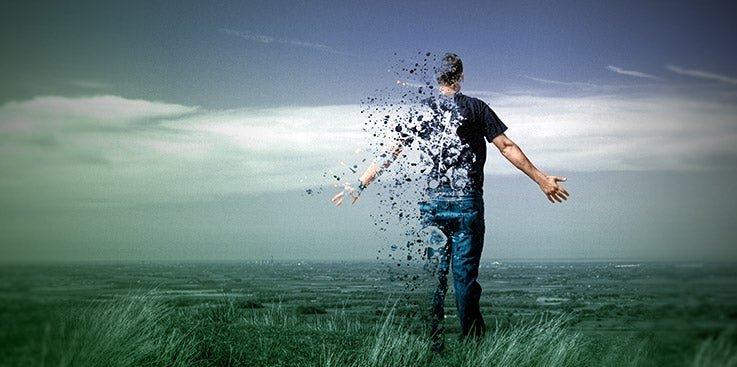


Nothing works better to build your immunity against eco-despair than Zoloft.  Just kidding.  Neoliberalism almost bought me out.  What I meant to say was that nothing works better to build your immunity against eco-despair than critical thinking.  

Try the following forms of critical thinking, and see how you feel upon a regular dose of using your noodle:

1.  Understanding the architecture of stories about climate change.  A cultural analysis of narratives shows that 80% of news and mainstream media frame the problem of climate change using apocalyptic tropes.  There's this whole field called "negative news bias". Look it up.  The media we consume wants us to feel awful.   Psychological research shows that doom-and-gloom narratives inspire emotions of guilt and fear in audiences-- emotions that have been shown to be passive.  So it's no wonder that, on a diet of such news, people disconnect or even deny climate change.  Psychology + media analysis proves that we need to get meta about our media.

2.  Understanding that the neoliberal structure of American history wants us to feel we are individuals, wonderful unique creatures, that are disconnected from history, each other, the oppressive structures of family, culture, and tradition, etc.  While there is so much to love about this impulse (I'm from California so I love pretending that nobody existed before me, and that I'm the most important person on earth), the myth of individualism also keeps us down.  Nothing awesome that we love ever happened by the efforts of any single person alone.  No historical triumph of progress over depravity ever occurred because of any one human.  If we're going to get out of the apocalypse, it'll be because we are part of a collective, what Paul Hawken calls the "blessed unrest."  Tune in to each other.  Cultivate collectivity and relation.  It's all that matters.  I'm serious!  Imagine the world does blow up.  Don't you want to be with your peeps?  And if it doesn't blow up, your peeps are the only thing that will get you through.  Cultivate community. DO IT. 

3.  I'll let you in on a crazy secret: there are cultures and traditions in the world that have suffered a lot, and they have mastered the fine art of facing crisis.  Look up "pleasure activism" and "misery resistance," for example.  Read Adrienne Maree Brown's book, Emergent Strategy.  It will change your whole worldview, if you're not already on board with her schtick.  Think you're the first generation to suffer and freak out about the state of the world?  Read the biographies of those who came before you.  Your elders.  They've seen it all.  You live in a world of general bliss, in the relative history of shitty societies.  If anybody knows how to face the apocalypse, it's our elders.  Look to them. 


4.  Tell better stories.  Stories make worlds.  Literally.  Don't just become a meta-reader of stories, deftly deflecting declension narratives in your sleep, or thousand-hand-slapping every jeremiad that comes your way, fiercely declaring "get back you devil!"  No, you're not just a consumer, deconstructer, analyst.  You also wield the super-powers of producing, creating, constructing.   What will you do with this miracle of storytelling, which is available to all?   Actively reject doom-and-gloom narratives in your own work, organizing, and telling of the story.  

Other frames are shown to be more effective at engaging people over the long-term.  Tons of research shows that the issue of human health makes your audience care a lot more about climate change than polar bears, much less krill.  God, I love krill. Don't get me started.  The way they provide the foundation of all ocean life.  The way they are the unsung hero of all charismatic ocean critters.  How they're the bellwether of ocean health, how Brad Pitt played a krill in Happy Feet.  Breathtaking performance, don't you think?  So. Freaking. Hot.

Where was I?

Oh, right, health.  So, studies show that framing climate change not as an issue that affects Brad Pitt, I mean, krill, but rather as an issue that affects our communities, families, and loved ones, is more effective at getting more people to acknowledge it as a problem, and to overcome the barrier that climate change feels distant, in both time and space.  How can we make climate change immediate, in both geography and temporality?  If temporal and geographical distance is one of the reasons people have a hard time caring about it, apocalypse won't work.  Know anybody experiencing the effects of climate change?  Exactly.  I thought so.  Forget Brad Pitt.  Think of your daughter, neighbor, classmate, yourself.  It isn't six degrees of Kevin Bacon.   Tell better stories about climate change that show the reality of how it's affecting YOU. 

5.  Never belittle the power of imagination.  Everywhere you go, ask this question (from Brown), "what would it take to thrive in a climate changed future?"  What does a smarter, healthy, thriving, just climate-changed future look like, exactly?  Imagine it.  Just take a few minutes and imagine it.  If you find you cannot imagine it, ask yourself if you are a coward and have accepted the neoliberal doctrine that you are acting alone (see above).  Or, ask yourself if you've bought the doctrine that you have no power.  Get meta. Make new narratives. See research on "nudge" and, for starters, finish this blog post.  Rebecca Solnit will teach you that the myth of powerlessness is a curse put on you by those in power to keep you consenting to being controlled.  Get over it, for the love of the Goddess!  That's just a cop-out, and yes I'm calling you out, in a gentle, loving, maternal way.  See all above posts, read Brown and Solnit, and even Jensen, here.  GET OVER IT and GET TO WORK.  

Turns out, the radical imagination is like gold to the movement, in this day and age when the imagination has been "privatized," as Solnit puts it, by capitalism.  Check out, as just one example, how others are cultivating the imagination. It's meta. It's so fucking meta.  


Side effects of this treatment of critical thinking may include:

1.  an increased love of krill
2.  a radical awareness that you're not alone against the world, something that might be termed “collective efficacy” 
2.  mindfulness of your many blessings, such as potable water, literacy, and the beloved who always listens to you cry about how the world is going to hell, like this:


3.  increased mindfulness of simple pleasures, such as petting a cute animal or laughing at terrible blog posts, without guilt

4.  increased desire to cultivate community, friendship, and relationships with loved ones

5.  radical empathy for others' suffering and conditions of their own efforts or lack thereof

6.  development of utter immunity to and/or transcendence of negativity. Or at least, getting more meta about it.  Ugly feelings? Yeah, it's a thing. Whatever.

7.  increased stamina to stay in the movement for the long haul, not just burn out into nihilistic state of apathy and despair.  Because you actively pursue research to inoculate yourself, you've already found this amazing movie, and this one too, oh, and this one.  Movies.  Why do they matter? They tell stories. CONSUME GOOD ONES.  META.

And a whole host of other boring things that don't really matter, but which have been substantiated by research: 


  • improved sleep quality
  • better relationships
  • increased nonviolent communication skills
  • fewer self-destructive behaviors
  • improved general well-being
  • acceptance of the paradox that the world is troubled, and we have to live fully in it
  • radical imagination for thriving in a climate-changed future.
Those are things that you should put on your resume, write home about, and, seriously, put on your Tinder profile.  Nothing's hotter than a krill-loving climate justice warrior who has the patience to sit in a chair and think through all these things before raging against the machine.  Also, that's what the planet needs. 


Tuesday, June 27, 2017

4 Tips for Building Self-Care into Your Syllabus


Do you sometimes feel like the demands of your students overwhelm and deplete you?  Do you feel like you're the therapist for an increasingly emotionally-needy millennial student body?

Considering the myriad reasons that those students are righteous in their increasing emotional neediness (student loans, fear of deportation, climate crisis, just to name a few), students need more from us these days than they used to.  Add into the equation whether you are a female faculty, or even more so, a female faculty of color, and the "cultural taxation"-- expectations around your ability to be helpful to students navigating the emotionally-challenging terrain of college, based on your own identity-- of your energy, time, and love, may threaten your own self-care.

This post is an attempt to give you some tools that draw boundaries between you and your students' infinite, black hole of need for you.

1.  Cultivate Peer-Peer Support

The best support for your students is each other, not you.  Build peer-to-peer assignments into your syllabus.  Require that they check with each other before writing you.  I make my final exam an open-book, open-friend, open-everything assignment, so students are encouraged to talk to each other.  I do a lot of group assignments in class and outside of class. I try to create spaces for cross-generational mentorship: senior students are required to talk to my lower-division courses.  We hold world-cafe style chats about advising across these cohorts.  Get creative.  How can you design ways for them to help each other?

2.  Maximize Your Office Hours

This may be controversial, but I don't hold "by appointment" office hours any more.  Forget it! I'll never get anything else done if I pretend I'm available any time to meet.  Students need faculty support all times of the day, so this is a joke.  Also, one-on-one office hours need to be limited.  Students always come into my office, close my door, and unload for an hour.  I have 150 advisees; this just won't cut it.

So, I've decided I do one hour of immediate, live, email office hours per week, for easy, practical questions that may benefit from something like a conversation, but online.  I hold a group office hour every week during which community-building and conversation can occur.  I try to advertise them in terms of themes that I find myself discussing repeatedly with individual students.  Why not hold a "how to apply to grad school" office hour that you advertise, instead of talking to 20 individual students about this over the semester?  Are students worried about DACA?  Hold an office hour about it, where they can talk to each other, and perhaps you bring in a resourceful person on campus.  Is some trauma happening on campus?   Hold your next group office hour about it.  Ask students to make requests about topics, so you can serve more students in an hour than you ever could one-on-one.

I am grateful to the Latino Center for Academic Excellence at HSU for allowing me to hold these sometimes in their center.  As Fernando Paz, our director, states, "change the setting, change the outcome." Holding office hours in spaces outside your office is transformative for students.

Where could you hold office hours that would serve more students?

Finally, I hold one hour of 15-minute appointments that are designed ONLY for the students who simply must speak to you privately, and in person.  These are the default office hour appointments, but they just don't work when you have a huge demand.  One-on-one appointments need to be limited, or else I'll never survive.  I want to encourage students to ask themselves, "do I need to talk to Sarah privately about this, or is this something I could email her about, or perhaps meet with her in a potentially non-private setting?"  If they're asked to think that through, I think you'll find they don't need one-on-one with JUST YOU for every single question and anxiety that pops into their brilliant and lovely heads.

I find this creative office hour schedule strategy helps build community, makes students feel served, and saves me a lot of closed-door, hourly meetings with students who really need a therapist, and to whom I struggle to ask to leave my office.  I'm not trying to be mean or unavailable, but seriously, office hours have become a bottomless pit of time-suckage for me, and I'm desperate to figure out ways to serve students while serving myself.  This really has worked for me.

3.  Support Peer Mentoring

Recognizing how important peer-to-peer mentoring is for effective learning and retention, not to mention saving my own energy and time, I applied for a grant to launch a peer mentoring program.  Consider how you might do this at your institution.

4.  Account for Emotion in the Classroom

Save yourself the extracurricular emotional labor of supporting individual students by carving out space in class time to address heavy stuff.  This is no small ask.  When you know something big is happening with a few students, and you know it's going to involve more office hour meetings, why not put aside some content in favor of collectively working through the big emotional thing? I've learned the hard way too many times that this is a good idea.

What do you do?

Because let's face it, all this stuff is killing us too.  And we have to keep serving our students, keep surviving these traumas ourselves, keep fighting on all the fronts around us, keep feeding our babies, keep laughing and sleeping, keep taking leaps of faith "by virtue of the absurd", and sustaining ourselves to do all that work.

Thursday, June 1, 2017

Whither Hope? A Bibliography

I have been teaching and researching about the various types of emotions in the category of "hope"--from "hokey hope" to "critical hope"-- and put together a small list of readings I love.  Please send me your favorite readings, films, podcasts!

Not listed here are readings that argue for the value of "ugly feelings" like despair. In my teaching and research, I want to think a lot more about the value of feelings that most Americans avoid in favor of our ostensible birthright emotion-- "happiness." Books like Ngai's Ugly Feelings and Ahmed's The Promise of Happiness would be on that list, so if you have other good ones, let me know too.

And, for how students respond to these readings, check out my environmental studies senior capstone blog, "Critical Hope."

Bibliography


Andrade-Duncan, Jeff.  “Growing Roses in Concrete.” (video here, article here).


Boggs, Grace Lee, with Scott Kurashige. The Next American Revolution: Sustainable Activism for the Twenty-First Century.  Berkeley: University of California Press, 2012.


Bristow, Tom, Thom van Dooren, Cameron Muir. “Hope in a Time of Crisis: Environmental Humanities and Histories of Emotions.” Histories of Emotions: From Medieval Europe to Contemporary Australia.  Blog post (November 6, 2015). Accessed 9 January 2017. https://historiesofemotion.com/2015/11/06/hope-in-a-time-of-crisis-environmental-humanities-and-histories-of-emotions/


Brown, Adrienne Maree. Emergent Strategy: Shaping Change, Changing Worlds. Chico: AK Press, 2017.


Freire, Paulo. “Opening Words.” Pedagogy of Hope: Reliving Pedagogy of the Oppressed.


Gore, Al. “The Turning Point: New Hope for the Climate.” Rolling Stone Magazine. Online June 18, 2014.  http://www.rollingstone.com/politics/news/the-turning-point-new-hope-for-the-climate-20140618
---. “The Case for Optimism on Climate Change.” TED.com. Accessed May 10, 2016.


Hawken, Paul. The Blessed Unrest: How the Largest Movement in the World Came Into Being and Why No One Saw it Coming. New York: Viking, 2007.


Houser, Heather. “How Does it Feel?” Ecosickness in Contemporary U.S. Fiction: Environment and Affect. New York: Columbia University Press, 2014.


Jensen, Derrick. “Beyond Hope.”  Orion Magazine Online.  https://orionmagazine.org/article/beyond-hope/


Kirksey, Eben. Emergent Ecologies. Durham: Duke University Press, 2015.

Loeb, Paul Rogat. ed. The Impossible Will Take a Little While: Perseverance and Hope in Troubled Times. New York: Basic Books, 2014.


Macy, Joanna and Chris Johnstone. Active Hope: How to Face the Mess We’re in without Going Crazy. Novato: New World Library, 2012.  


Roberts, David. “Is There Hope on Climate Change?”  The Impossible Will Take a Little While: Perseverance and Hope in Troubled Times. Edited by Paul Rogat Loeb. New York: Basic Books, 2014.


Solnit, Rebecca. A Paradise Built in Hell: The Extraordinary Communities that Arise in Disaster. New York: Viking, 2009.  
--- “Acts of Hope: Challenging Empire on the World Stage.” TomDispatch.com. Website. Accessed June 11, 2016.


Walker, Alice. “Only Justice Can Stop a Curse.” The Impossible Will Take a Little While: Perseverance and Hope in Troubled Times. Edited by Paul Rogat Loeb. New York: Basic Books, 2014.


Weston, Anthony.  Mobilizing the Green Imagination: An Exuberant Manifesto. New Society Publishers, 2012.

Thursday, May 25, 2017

NPR interviewed me about Eco-Grief!

I look forward to more collaborations with Laura Schmidt, but for starters, I was interviewed for a story about her work with Good Grief, an eco-grief group in Salt Lake City.

Check out the NPR story here.

This is part of my larger project on affect and environmental studies.

Wednesday, May 24, 2017

"The Affective Arc of Environmental Studies Undergraduate Curricula"

The following is an abstract of my chapter in Jenn Ladino and Kyle Bladow's forthcoming Affective Ecocriticisms:

“The task is not to shrink ourselves into a corner, to dissolve ourselves into ‘no impact,’ but rather to find another, new, even spectacular way […] to co-inhabit this world” (Weston, xiv).

Told their whole lives to “leave no impact” on the planet, or worse, to “save the planet, kill yourself,” undergraduate Environmental Studies (ES) students today are seduced into a kind of green, self-erasing nihilism. During their baccalaureate studies, ES students go from being idealistic and optimistic to despairing and apathetic when they learn how unjust the world is, and how entrenched our environmental crises are.  Their courses do not help them imagine recourse to their complicity in social and environmental injustices across the globe. They are certain that anything they could individually do would never be enough to address the vast scale of problems.  And more, they become pessimistic about the ability of existing institutions and systems to act in anything but the interests of capitalist growth. ES students often leave college not the well-trained, problem-solving leaders that ES programs promise on their websites, but deflated, aimless, self-loathing, ashamed, angry, and apathetic.  

This chapter argues that greater attention to the affective experiences of ES students within ES curricula is crucial to developing the generation of environmental leaders so many programs claim to be training. But it is not only a matter of meeting our outcomes; it is an pedagogical concern: it is unethical to expect students to devote themselves to saving the planet, but then fail to prepare them affectively and psychically for this challenge, as if the intellectual projects of our syllabi and curriculum design are separate from students’ embodied lives. Those who study ES programs understand that a poorly-organized ES experience creates an “urgency + despair = apathy” scenario (Maniates), but less scholarship is devoted to articulating the alternatives, and even less acknowledges the centrality of students’ emotional responses to their coursework to generating or failing to generate the next generation of thinkers and leaders.

I examine the affective experiences of undergraduate Environmental Studies (ES) majors, with the aim of offering insights about environmental affect for the development of undergraduate ES programs and curricula. ES syllabi often end with a hopeful turn, in order to avoid leaving students completely nihilistic and paralyzed by despair.  But I want to offer a deeper critique of this classic “arc of hope” narrative.  Building on Heather Houser’s critique of the positive affects of hope and optimism in Ecosickness, Sara Ahmed’s various critiques of happiness, and the growing literature on hope in the environmental movement (Solnit, McKibben, Weston, and Bristow et al, for example) and in critical pedagogy (hooks, Duncan-Andrade, Freire, Fiskio, and West, for example), I will argue that we undermine the potential of these future planet-savers by suggesting that hope alone will adequately prepare them for the turbulent waters ahead. This literature also insists that making material relevant to and respectful of students’ whole selves, not just their minds or desire to obtain employment upon graduating, is necessary for retaining underrepresented students.  Thus, I also want to argue, ES curricula need to be more attentive to students’ affective lives if they want to not only attract underrepresented students, but to help them to thrive in college.

To these ends, I will argue that ES curricula must trouble students’ assumptions about happiness, provide them tools to critically analyze the effects of environmental narratives on their energies, challenge their views of what “counts” as social change, and deconstruct their attachments to binaries like theory/action and objectivity/subjectivity, hard/soft skill, and problem-solving/academic. These skills are needed in order to avoid slipping into paralysis, for destabilizing existing power relations, and for creating the affective conditions for sustaining mind and body in the face of crisis.  As the very “conversation around hope within environmental discourse is itself anguished,” leading to either naiveté or techno-optimism, as Houser argues (219), I suggest a variety of these more complex strategies, which achieve two goals I will explore in this essay: they acknowledge that ES syllabi and curricula are environmental narratives and should therefore be analyzed as a discourse of “ecosickness”, and, most importantly, they help “set into motion the messy emotions that can […] direct our energies toward planetary threats” and action (Houser, 223). When ES students graduate, as much as they need to know the details of environmental problems and the uneven benefits and burdens of their solutions, they need the affective disposition and the imaginations to intervene as engaged citizens. 

Works Cited

Ahmed, Sara. “Happy Objects.” The Affect Theory Reader. Edited by Melissa Gregg and Gregory J. Seigworth. Durham: Duke University Press, 2010.

---. The Promise of Happiness. Durham: Duke University Press, 2010.

Duncan-Andrade, Jeff. “Note to Educators: Hope Required When Growing Roses in Concrete.” Harvard Educational Review 79:2 (Summer 2009).

Fiskio, Janet. “Building Paradise in the Classroom.” Teaching Climate Change in the Humanities. Edited by Stephen Siperstein, Stephanie Lemenager, and Shane Hall. New York: Routledge, forthcoming 2016. (manuscript provided by author).

Freire, Paulo. Pedagogy of Hope: Reliving Pedagogy of the Oppressed. Bloomsbury Academic, 2014.

hooks, bell. Teaching Community: A Pedagogy of Hope.  New York: Routledge, 2003.

Houser, Heather. Ecosickness in Contemporary U.S. Fiction: Environment and Affect. New York: Columbia University Press, 2014.

Maniates, Michael. “Teaching for Turbulence.” State of the World 2013: Is Sustainability Still Possible? The Worldwatch Institute, 2014. Website.

McKibben, Bill. Hope, Human and Wild: True Stories of Living Lightly on the Earth. Milkweed, 2007.

Solnit, Rebecca. Hope in the Dark: Untold Histories, Wild Possibilities. Nation Books, 2005.

--- A Paradise Built in Hell: The Extraordinary Communities that Arise in Disaster. Penguin, 2010.

Bristow, Tom, Thom van Dooren, and Cameron Muir. “Hope in a Time of Crisis: Environmental Humanities and Histories of Emotions.” Histories of Emotions. Website. Accessed February 1, 2016.

West, Cornel. The Courage to Hope: From Black Suffering to Human Redemption. Beacon Press, 1999.

Weston, Anthony.  Mobilizing the Green Imagination: An Exuberant Manifesto. New Society Publishers, 2012.