Most-Read

Showing posts with label parenting. Show all posts

Monday, October 2, 2017

"I Like Big Butts and I Cannot Lie": Or, Why I Should Put My Children in a Bubble

The other day, my nearly 7-year old came home singing "I like big butts and I cannot lie!"

Oh. My. God.

What have I done.

Titillated by my horror, she started singing it louder, and more, and smiling giddily while doing so.

Then, my 3 1/2-year old, who had been watching all of what is commonly known as the classic "child/parent nonverbal horror-titillation feedback cycle," joined in.  Because obviously.

Oh. My. God.

I'm a terrible mother. How did this happen?  How did I end with two children delightfully powering out this line from Sir MixaLot's "Baby Got Back" in the bathtub?

In moments like this, you have two choices, as I see it.  One: laugh, embrace the passing on of a classic song of my own generation to my kin, and appreciate my kids' exposure to all the pleasures of popular culture.

Alternatively, and less likely, I can undo their learning.  Good luck.   Parental advisory noted, but how was I supposed to see "big butts" coming down the pike?  I mean, she's only 7 for goodness sake!  I wasn't prepared for this.

Ok, so, let's go with option 1: laugh and try to make lemonade with these lemons.

I think of myself as a mediator of the world--not the maker of the world-- for my kids. I love grabbing these teaching moments by the horn, and relinquishing the pretense that I can be a kind of saran wrap around my kids, a prophylactic to cultural effluvia.

"Baby's Got Back" isn't really effluvia, either.  Actually, it was a feminist anthem of my generation.  Who can argue with "my anaconda don't want none unless you got buns, hon!"?  And c'mon, this is funny: "you can do side-bends or sit-ups, but please don't lose that butt!"  The song was an irreverent thumb in the eye of the expectations of femininity in American culture, which is and certainly was (in  1992, the year I consider the peak of musical craziness in my life) raced as much as it's gendered. That is, embracing a big butt was both a rejection of patriarchal culture's expectations of thinness and a rejection of white culture's ideals of femininity.
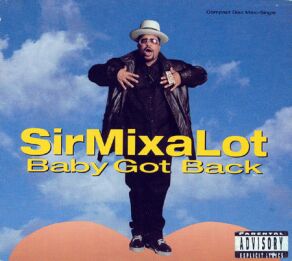


Sure, the song has problems. Sure, it still sexualizes women and dissects them into body parts, and does so in ways that don't do any kind of woman any favors.  The video of the song repeated all the same misogynistic tropes that the genre was famous for, except it did so with women who have large rear ends instead of skinny ones.  Not all that radical, you could say.  In some ways, sure, the song didn't undo as much patriarchy as it perpetuated.

Ok, but flash forward to your 7-year old girl coming home singing it in 2017.

I carry on the campaign to teach kids that women are whole people and that they are not reduced to their looks, regardless of the girth or lack thereof of their backsides.  We are more than our backsides.   But this song isn't the first chance I've had to have that conversation, PA-LEASE, people.

From Hillary to Melania to Michelle, ample opportunities exist to explore how women's whole identities matter little compared to their looks in American culture.  Sir MixaLot isn't the only one preaching that message.

The real challenge is to not be horrified by my child's lost innocence, because I can't keep her in a bubble forever.  She's going to grow up in this white supremacist patriarchal culture, so I'm going to start from that premise.  Instead of pretending that we aren't all breathing in all that toxicity all the time, whether we choose to recognize it or not (aka "white privilege"), or, even more importantly, whether we have no choice in the matter in the first place, I am going to unpack "Baby's Got Back" with my kiddos.

My near-7-year old loves talking about racial and sexual history and politics; she is profoundly interested in understanding how people operate and interact, and how power has worked in history.  So, even though I haven't quite figured out my approach with this particular song, I will.  By bringing that song home, she's opening up a wonderful window into the context of her daily life, and thus an opportunity to talk about these difficult conversations. I'll leave the sex stuff out (for now), but the gender and race stuff is being handed over on a silver platter; I want to rise to the occasion and take this chance to talk to her: why was the song was so powerful, what kind of cultural work was it doing when it came out, why might people not like hearing her, much less her younger sister, sing it, etc?

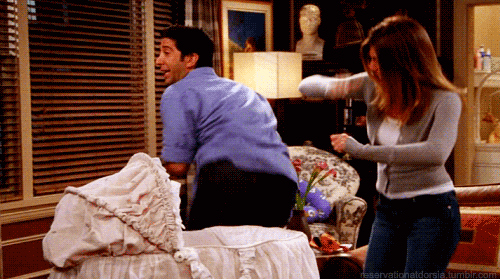
It'll be fun and important, one day, to deconstruct the cultural shenanigans going on in this Friend's episode, "The One with Ross's Inappropriate Song".  Why would this song be "inappropriate" in this show?  Why is this storyline "funny", and to whom?  What assumptions about race, class, and gender does the joke rely on to work," and who might it hurt?


At the very least, in any way my young girls can receive drips and drops of the message that big is beautiful, to shore up some strength against the tidal waves of "big is not beautiful", I'll take it.  Sir MixaLot did that for me and who knows how many other young women, and, obviously, still is.  The song may reinforce some kinds of problems even as it rejects one form of oppression, but I'll take it.

I'm not putting my kids in a bubble. My parents didn't put me in a bubble, though I do sometimes wish I hadn't seen so many damn Disney movies. Seriously.  I'm still traumatized by the realization that life after marriage is not happily ever after, just sayin'.

But if I can't control what my kids absorb in their hours when they aren't under my roof, I can at least parent the shit out of this song.



Saturday, July 8, 2017

Got Umwelt? A Children's Book that Will Blow Your Philosophical Mind


Animals have long been a major theme of children's books.  Animal studies critics historicize the beginning of this phenomenon, bemoaning the resulting infantilization of animals.  When children and animals become so closely associated, at least in the Western imagination, they are both demeaned, according to these critics, at least: animals become like children, and children like animals.

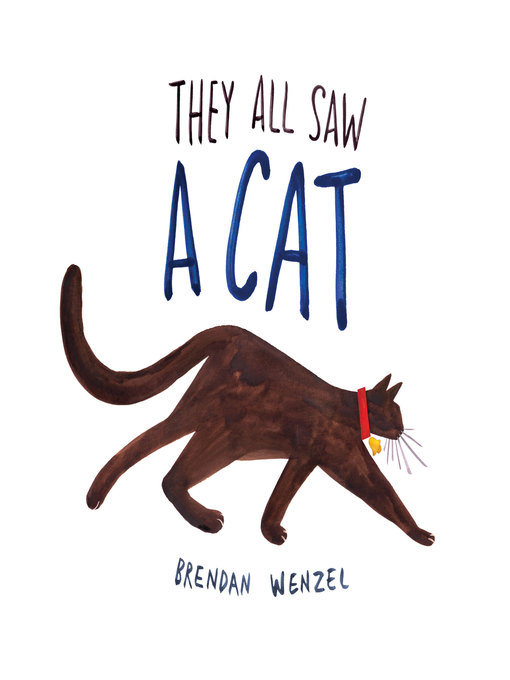
Having observed my own two children fall in love with reading, books, and their imaginations, not to mention animals, through children's books, it's hard for me to resist a great children's book about animals. But I'm particularly moved when I find a book that does justice to both animals and children.  They All Saw a Cat, by Brendan Wenzel, is one such book.


Got Umwelt?

The whole premise of this very simply written book is that all kinds of animals perceive the cat in all kinds of different ways.  The illustrations are evocative of a diversity of umwelts, or worldviews, to use Jakob von Uexküll's term.  Each page shows a different animal perceiving the cat, and each illustration evokes the unique possible ways that those different animals may perceive the cat.

So, for example, the worm might only perceive the cat through vibrations it feels underground as the cat walks above.  The illustration of this page shows only lines underground in the shape of a cat, surrounding the worm.

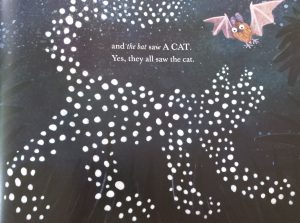
The bee sees a bunch of colored dots that make up a cat face.  The fox mostly hears a cat, right?  So it "sees"* in the illustration, at least, mostly a bell hanging around the cat's neck.  How about a bat?  It "sees" the cat as echolocation, of course. How would you represent that in a visual illustration?  In the book, it's a bunch of dots in the night that make the shape of a cat.  We "see" (or feel, or hear, or sense) the cat from the perspective of a snake (represented by the illustrator in infrared), a child, a bird, a bee, a flea, etc.


How would a bat "see" a cat? 


From the perspective of animal studies, this is precisely the kind of appreciation of animals we need more of in the world.  The reason for this is because animal studies critics don't like the fact that most Western representations of animals project human qualities or desires onto animals instead of seeing animals as potentially carrying their own perspectives, desires, and intelligences.  In most children's books, this means that animals play supportive, secondary roles to the child or human in the story.  They are blank slates on which to play out the drama of human needs.

They All Saw a Cat totally rejects that Western trope of the animal in children's books. It asks readers to imagine perceiving the world through all our senses, like so many animals do.  It demands that readers imagine what it would be like to go through the world as a bat, or a snake, or a bee, or even a worm.  In other words, it simultaneously asks readers to transcend our hubristic humanism that universalizes experience and knowledge of the world, and to put themselves in the place of each of these animals.  Through the worm, we learn what it might feel like to be anybody but ourselves.  This is the most important foundation of empathy.  Surely, if we're going to exploit animals in children's stories, this would be the right reason.


How would a fish "see" a cat? Watery and huge, looking at it through the fishbowl glass!


Of course, our protagonist is the cat, who walks through each page, encountering each of these animals.  After meeting a few animals, the cat gets its own page again, anchoring the reader in its perspective.  Every few pages, we read again, "And the cat walked through the world, with its whiskers, ears, and paws."

Why does Wenzel reiterate how the cat walked through the world, "with its whiskers, ears, and paws"? What is it about these things-- whiskers, ears, and paws, that require repetition in such a word-shy book?  What do whiskers, ears, and paws do for the cat?  Why are they so important?  Once again, they are the cat's main sensing organs-- notice that "eyes" are not part of that list.  Wenzel wants us to de-privilege sight/vision, which is humans' (or at least, Western humans') primary way of knowing the world. Think about how "we" (i.e. me and lots of people like me, but not necessarily you), come to know what is "true" in the world-- through SIGHT.  "You have to see it to believe it," right?

I can't help but think that Wenzel's totally down with von Uexküll, and really wants us to think about how other senses might tap into other truths, other worlds. This is a crucial insight of the philosophical theory of phenomenology--that the body (i.e. senses), not the mind (i.e. reason) gets us to the truth. So, the body and all its senses, no matter what kind of animal you are, determines your truth.  This is radical. It rejects the predominant theory of the father of Western philosophy, Rene Descartes, who told us that "cogito ergo sum" (I think, therefore I am). Many cite Cartesian dualism for separating humans from nature, and for authorizing the exploitation of all nature, including animals, as resources to be used for human needs.  In other words, if human reason derived through vision is the basis of all truth and knowledge, then animals (and anybody else) who perceives the world in any other way is less than human.

Wenzel is rocking my world with this children's book, which privileges all kinds of ways of perceiving multiple realities.  The book challenges any one objective, universal (e.g. "human") way of knowing truth, and privileges the truth that emerges from individual uniqueness-- what feminist philosophers call "standpoints".   How does Wenzel pack all this heady stuff into a children's book?
The book asks readers to get outside of themselves (and the realities we're imposing upon them) to grasp the ways in which other creatures and people feel and understand the world differently than they do.

The potential here for a nicer world, dare I say social justice, is huge. But what I love about the book is that Wenzel makes this argument without costing animals their own agency, or rendering their lives secondary to human plots and desires.

My daughter came up with the idea to paint how the bee sees the cat. See, this book ROCKS! 

*Why does Wenzel use the verb "sees" for all the animals, when his whole point is to get us out of ocularcentrism? I think it's to ask readers to rethink what "see" might mean for other creatures. Of course, you can't "see" vibrations or sounds, but that's the genius of the book: how to represent vibrations, sounds, heat, fear, and non-normative sight (e.g. "bird's eye view") in illustration?  Even though he uses "sees" when he really means "feels" or "hears", the accompanying illustrations expose the limits of the visual.