


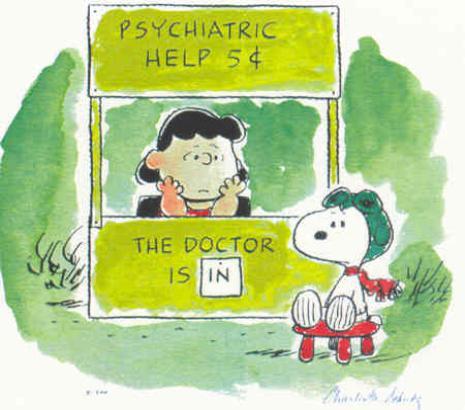
Do you sometimes feel like the demands of your students overwhelm and deplete you? Do you feel like you're the therapist for an increasingly emotionally-needy millennial student body?
Considering the myriad reasons that those students are righteous in their increasing emotional neediness (student loans, fear of deportation, climate crisis, just to name a few), students need more from us these days than they used to. Add into the equation whether you are a female faculty, or even more so, a female faculty of color, and the "cultural taxation"-- expectations around your ability to be helpful to students navigating the emotionally-challenging terrain of college, based on your own identity-- of your energy, time, and love, may threaten your own self-care.
This post is an attempt to give you some tools that draw boundaries between you and your students' infinite, black hole of need for you.
1. Cultivate Peer-Peer Support
The best support for your students is each other, not you. Build peer-to-peer assignments into your syllabus. Require that they check with each other before writing you. I make my final exam an open-book, open-friend, open-everything assignment, so students are encouraged to talk to each other. I do a lot of group assignments in class and outside of class. I try to create spaces for cross-generational mentorship: senior students are required to talk to my lower-division courses. We hold world-cafe style chats about advising across these cohorts. Get creative. How can you design ways for them to help each other?
2. Maximize Your Office Hours
This may be controversial, but I don't hold "by appointment" office hours any more. Forget it! I'll never get anything else done if I pretend I'm available any time to meet. Students need faculty support all times of the day, so this is a joke. Also, one-on-one office hours need to be limited. Students always come into my office, close my door, and unload for an hour. I have 150 advisees; this just won't cut it.
So, I've decided I do one hour of immediate, live, email office hours per week, for easy, practical questions that may benefit from something like a conversation, but online. I hold a group office hour every week during which community-building and conversation can occur. I try to advertise them in terms of themes that I find myself discussing repeatedly with individual students. Why not hold a "how to apply to grad school" office hour that you advertise, instead of talking to 20 individual students about this over the semester? Are students worried about DACA? Hold an office hour about it, where they can talk to each other, and perhaps you bring in a resourceful person on campus. Is some trauma happening on campus? Hold your next group office hour about it. Ask students to make requests about topics, so you can serve more students in an hour than you ever could one-on-one.
I am grateful to the Latino Center for Academic Excellence at HSU for allowing me to hold these sometimes in their center. As Fernando Paz, our director, states, "change the setting, change the outcome." Holding office hours in spaces outside your office is transformative for students.
Where could you hold office hours that would serve more students?
Finally, I hold one hour of 15-minute appointments that are designed ONLY for the students who simply must speak to you privately, and in person. These are the default office hour appointments, but they just don't work when you have a huge demand. One-on-one appointments need to be limited, or else I'll never survive. I want to encourage students to ask themselves, "do I need to talk to Sarah privately about this, or is this something I could email her about, or perhaps meet with her in a potentially non-private setting?" If they're asked to think that through, I think you'll find they don't need one-on-one with JUST YOU for every single question and anxiety that pops into their brilliant and lovely heads.
I find this creative office hour schedule strategy helps build community, makes students feel served, and saves me a lot of closed-door, hourly meetings with students who really need a therapist, and to whom I struggle to ask to leave my office. I'm not trying to be mean or unavailable, but seriously, office hours have become a bottomless pit of time-suckage for me, and I'm desperate to figure out ways to serve students while serving myself. This really has worked for me.
3. Support Peer Mentoring
Recognizing how important peer-to-peer mentoring is for effective learning and retention, not to mention saving my own energy and time, I applied for a grant to launch a peer mentoring program. Consider how you might do this at your institution.
4. Account for Emotion in the Classroom
Save yourself the extracurricular emotional labor of supporting individual students by carving out space in class time to address heavy stuff. This is no small ask. When you know something big is happening with a few students, and you know it's going to involve more office hour meetings, why not put aside some content in favor of collectively working through the big emotional thing? I've learned the hard way too many times that this is a good idea.
What do you do?
Because let's face it, all this stuff is killing us too. And we have to keep serving our students, keep surviving these traumas ourselves, keep fighting on all the fronts around us, keep feeding our babies, keep laughing and sleeping, keep taking leaps of faith "by virtue of the absurd", and sustaining ourselves to do all that work.

